

Psychosocial Risk Controls

Design practical controls that address the sources of psychosocial risk.
We help organisations strengthen existing controls, identify gaps and prioritise practical responses across work design, organisational systems and operational practices.
Knowing the risk does not mean it is being controlled.
Psychosocial risks may be recognised across the organisation while existing responses remain fragmented, reactive or difficult to evaluate.

Without a structured control process, organisations can struggle to determine whether current measures address the sources of risk, where gaps remain and what should be prioritised next.

OUR APPROACH
A focused approach to psychosocial risk control
Effective controls are shaped around the risk, the work context and the organisational conditions that influence exposure.
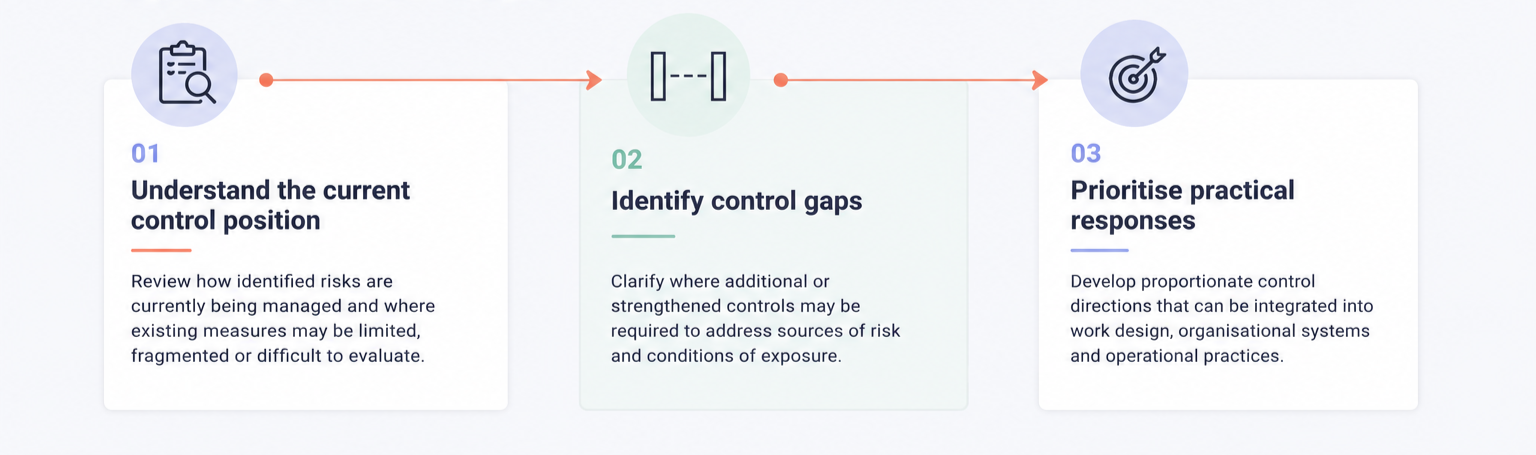

Controls need to act on the conditions that create or sustain risk.
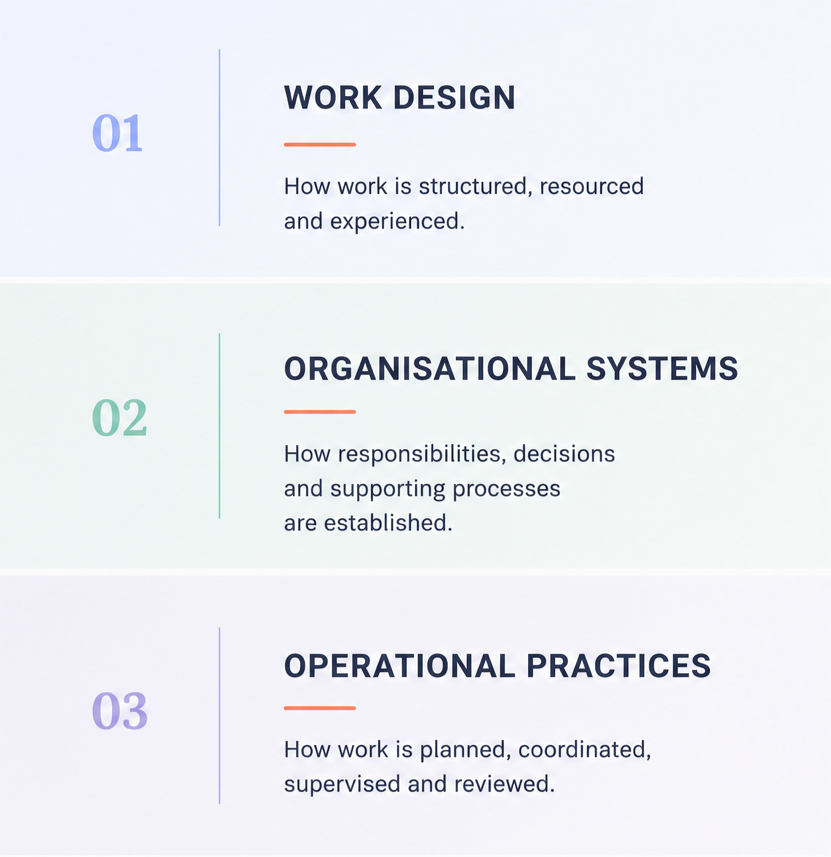
Effective psychosocial risk control may require changes across how work is designed, the systems that support decisions and the practices that shape everyday work.
WHEN THIS SERVICE MAY BE RELEVANT
When identified risks are not translating into clear control actions.
The focus is not on adding more activity. It is on clarifying where control effort should be directed and how responses can be strengthened.
This service may be relevant where an organisation:
Has identified psychosocial hazards but is unclear whether current controls are adequate.

Is relying heavily on awareness, training or individual-level responses.
Needs to strengthen how controls address sources of risk across work design, organisational systems or operational practices.
Has completed an assessment, review or consultation process but needs a clearer pathway into prioritised action
Need a clearer pathway from identified risk to practical control action?
Let’s discuss your current risk position, existing responses and where stronger control direction may be required.
Where controls need to operate consistently across the organisation, psychosocial management system integration may be required.